
Taking Prevention of Violent Extremism to the Private Sector
Ruth's Journey: From Mobile Money Dealer to Partner in Prevention:
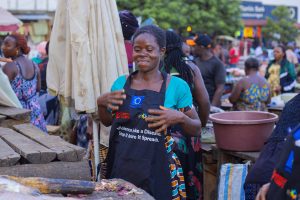
Every day, Ruth sits at her mobile money kiosk near the Uganda–DRC border serving customers, processing transactions, and earning a living. Like many business people operating in busy border communities, her focus was on meeting customers' needs and sustaining her business. Until recently, violent extremism was not something she thought concerned her.
To Ruth, issues of terrorism and violent extremism belonged to security agencies, the military, police, and intelligence services. She viewed them as distant threats that had little connection to her daily work as a mobile money dealer. That perception changed when she participated in the PEARL Project's engagement on Strengthening Private Sector Leadership Engagement in P/CVE for Early Warning, Information Sharing and Community Resilience Against Violent Extremism in Kasese District. Reflecting on her experience, Ruth explained:
"I have been running my mobile money business like any ordinary person at the border, serving customers and carrying out transactions every day. I never imagined that members of the business community could be affected by terrorism or that some of the transactions we facilitate could potentially be connected to activities that support terrorism and violent extremism. Now I am more alert. I understand the early warning signs better and, importantly, I know where to report if I encounter something concerning terrorism financing."
For Ruth, the training was an eye-opening experience. For the first time, she began to understand that border businesses operate within environments where people, money, goods, information and services move constantly. These same spaces can sometimes be exploited by individuals involved in criminal or extremist activities. She realized that while she was not responsible for investigating such activities, she could play an important role in recognizing unusual patterns and supporting appropriate reporting mechanisms.
 A Shift in Mindset
The most significant change for Ruth was not simply learning about violent extremism. It was understanding that prevention is everyone's responsibility.
"Before the engagement, I thought issues of terrorism were mainly for the police, the army and other security agencies. I did not see myself as having any role. But I now understand that prevention starts with being alert to what happens around us and knowing what to do when we see something that does not look right."
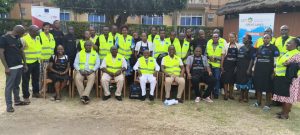
Through the training, Ruth and other participants learned about violent extremism, early warning signs, community vulnerabilities, responsible information sharing, referral pathways and early response mechanisms.
This transformed her understanding of security from something handled exclusively by government institutions into a shared community responsibility.
"I now pay more attention to unusual patterns and situations around my business. I have learnt that being alert does not mean accusing people or taking matters into my own hands. It means recognizing possible warning signs, handling information responsibly and knowing the right people and channels to report to."
This change reflects one of the PEARL Project's most important objectives: empowering citizens to become informed and responsible contributors to prevention while respecting the roles of security and government institutions.
Finding a Voice Beyond the Marketplace
Ruth's journey did not end with the training. As part of the engagement, she was invited to participate in a radio talk show discussing the role of the private sector in preventing violent extremism and strengthening community resilience. For someone who had never spoken publicly about security issues, this was a remarkable experience.
"I have never once in my life appeared on a radio talk show, and here I am today talking about business and how we can safely operate in the face of terrorism as border traders."
The radio programme gave Ruth and other private-sector actors an opportunity to share their experiences and concerns with a wider audience.
More importantly, it helped demonstrate that discussions about security, resilience and prevention are not only for government officials and experts, they are relevant to ordinary citizens whose lives and businesses can be affected by instability and insecurity.
The radio engagement also helped spread messages about vigilance, responsible reporting, peaceful coexistence and community resilience to people who had not attended the training.
 From Individual Change to Community Impact:
Ruth's story reflects a broader transformation that occurred through the PEARL Project's engagement with the private sector. For many years, discussions on violent extremism were largely confined to government and security institutions.
Through PEARL, business owners, traders, market vendors, transport operators, mobile money dealers, hospitality workers and other economic actors were brought into the conversation. As a result, participants began to see themselves not only as beneficiaries of security but also as contributors to prevention.
The intervention expanded awareness of P/CVE beyond traditional security structures, strengthened understanding of early warning and referral mechanisms, improved information sharing between communities and authorities, and reinforced the importance of collaboration among different sectors of society.
A police officer responsible for community liaison captured this shift well: “I am glad that URI'-GL/Mercy Corp’s approach has brought everyone on board, including members of the private sector. This initiative makes information sharing and coordination of efforts much easier."
A New Understanding of Prevention
Today, Ruth sees her role differently. She does not view herself as a security officer, investigator or an intelligence agent. Instead, she sees herself as a responsible citizen and businessperson who can contribute to the safety and resilience of her community.
"I used to think that if there was a problem of terrorism, someone else would deal with it. Now I understand that prevention involves all of us. I have a responsibility to be informed, to be careful about what happens around my business, to avoid spreading rumors and to report concerns through the right channels."
Her story illustrates a powerful change from passive awareness to active responsibility. It demonstrates how a Whole-of-Society approach can empower ordinary citizens to become partners in prevention and resilience-building. For Ruth, the journey began as a mobile money dealer attending a workshop.
It ended with a new understanding that peace, security and prevention are not solely the responsibility of government institutions—they are collective responsibilities that require the participation of communities, businesses, civil society, cultural institutions, religious leaders, women, youth and every citizen. In that sense, Ruth's story is not only about one woman at a border trading center.
It is a story about how the PEARL Project is helping transform prevention from a government-led agenda into a shared community responsibility across the Rwenzori region in Uganda.
A Shift in Mindset
The most significant change for Ruth was not simply learning about violent extremism. It was understanding that prevention is everyone's responsibility.
"Before the engagement, I thought issues of terrorism were mainly for the police, the army and other security agencies. I did not see myself as having any role. But I now understand that prevention starts with being alert to what happens around us and knowing what to do when we see something that does not look right."
Through the training, Ruth and other participants learned about violent extremism, early warning signs, community vulnerabilities, responsible information sharing, referral pathways and early response mechanisms.
This transformed her understanding of security from something handled exclusively by government institutions into a shared community responsibility.
"I now pay more attention to unusual patterns and situations around my business. I have learnt that being alert does not mean accusing people or taking matters into my own hands. It means recognizing possible warning signs, handling information responsibly and knowing the right people and channels to report to."
This change reflects one of the PEARL Project's most important objectives: empowering citizens to become informed and responsible contributors to prevention while respecting the roles of security and government institutions.
Finding a Voice Beyond the Marketplace
Ruth's journey did not end with the training. As part of the engagement, she was invited to participate in a radio talk show discussing the role of the private sector in preventing violent extremism and strengthening community resilience. For someone who had never spoken publicly about security issues, this was a remarkable experience.
"I have never once in my life appeared on a radio talk show, and here I am today talking about business and how we can safely operate in the face of terrorism as border traders."
The radio programme gave Ruth and other private-sector actors an opportunity to share their experiences and concerns with a wider audience.
More importantly, it helped demonstrate that discussions about security, resilience and prevention are not only for government officials and experts, they are relevant to ordinary citizens whose lives and businesses can be affected by instability and insecurity.
The radio engagement also helped spread messages about vigilance, responsible reporting, peaceful coexistence and community resilience to people who had not attended the training.
From Individual Change to Community Impact:
Ruth's story reflects a broader transformation that occurred through the PEARL Project's engagement with the private sector. For many years, discussions on violent extremism were largely confined to government and security institutions.
Through PEARL, business owners, traders, market vendors, transport operators, mobile money dealers, hospitality workers and other economic actors were brought into the conversation. As a result, participants began to see themselves not only as beneficiaries of security but also as contributors to prevention.
The intervention expanded awareness of P/CVE beyond traditional security structures, strengthened understanding of early warning and referral mechanisms, improved information sharing between communities and authorities, and reinforced the importance of collaboration among different sectors of society.
A police officer responsible for community liaison captured this shift well: “I am glad that URI'-GL/Mercy Corp’s approach has brought everyone on board, including members of the private sector. This initiative makes information sharing and coordination of efforts much easier."
A New Understanding of Prevention
Today, Ruth sees her role differently. She does not view herself as a security officer, investigator or an intelligence agent. Instead, she sees herself as a responsible citizen and businessperson who can contribute to the safety and resilience of her community.
"I used to think that if there was a problem of terrorism, someone else would deal with it. Now I understand that prevention involves all of us. I have a responsibility to be informed, to be careful about what happens around my business, to avoid spreading rumors and to report concerns through the right channels."
Her story illustrates a powerful change from passive awareness to active responsibility. It demonstrates how a Whole-of-Society approach can empower ordinary citizens to become partners in prevention and resilience-building. For Ruth, the journey began as a mobile money dealer attending a workshop.
It ended with a new understanding that peace, security and prevention are not solely the responsibility of government institutions—they are collective responsibilities that require the participation of communities, businesses, civil society, cultural institutions, religious leaders, women, youth and every citizen. In that sense, Ruth's story is not only about one woman at a border trading center.
It is a story about how the PEARL Project is helping transform prevention from a government-led agenda into a shared community responsibility across the Rwenzori region in Uganda.