Do leaders serve the aspirations of the people they lead? As they aspire for these positions, do they clearly understand what they are meant to deliver? Are the masses empowered enough to use their votes to win services? Zaria Ddamulira, the Legal and Human Rights Officer at (URI-GL), shares a reflection on the trend of electoral promises in Uganda. Well, we take you through the 2106 electoral campaign journey in Uganda and bring you what some of the aspiring candidates promised the masses to earn a vote.
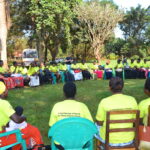
We piloted this journey with 3 CCs from the Ugandan membership namely; Body and Soul, Faiths Together Uganda, INTERDIP, and Youth Interfaith Partnership. Our pilot initiative in Wakiso, Mukono and Kayunga has given us the opportunity to leverage on the legitimacy of the local clergy members to work with the elected candidates on promoting citizen accountability just from the promises they made. The clergy, who hail from different faith backgrounds and spiritual expressions, were trained on the different roles and duties of the Presidency, Members of Parliament and the Local council chairpersons as well as on the electoral, legal and dialogue mechanisms to place them in the lead role of playing the oversight role for their elected leaders.
“The politicians have been coming to us for blessings, we bless them and they go and we never see them again until the next elections. How i wish we had known that we had a stake in politics to put them to task to deliver on the people’s outcry for services! Reverend Ssenkaanga Kizito from Mukono district who regards this initiative as an opportunity to guide and mentor the leaders who come to them for blessings.
Being districts with a consistent history of robust electoral contests, the promises from the three pilot districts touch on the widely contested issues of these areas as documented by the district monitors coming from our grassroots membership (the Cooperation Circles), namely Interfaith Youth Partnership (IYPA), Faiths Together Uganda (FTU), Body and Soul and INTERDIP that were also trained by this project.
“One candidate vying for Member of Parliament in Mukono municipality, has promised to resist heavy taxation by local authorities, and resist the takeover of Kiwanga area by the government as an administrative unit of the capital, Kampala”.
As for many candidates in Kayunga district, the promises made were to address land grabbing by politically-connected private developers, which is a source of persistent violent conflicts in the area.
The citizens were also treated to promises to address the development needs of the people in these districts which when pursued could transform people’s lives.
I will fight floods at Kyewambogo area, enhance cooperatives or Savings and Credit Cooperatives (SACCOs) for development, Construct public toilets in trading centres, Construct hospitals and improving the transport system in Mukono as well as electricity supply for the area.
As promised by a National Resistance Movement (NRM) party ticket vying for the Local council V chairperson position in Mukono South Constituency.
As the electorate awaited for service-related promises, the campaign experience did not miss out on the treat to drama as most rallies turned out to be musical galas. Molly Basimaki of Interfaith Youth Partnership CC who participated as a monitor in Wakiso district reflects on her experience,
“We were shocked to find most of the campaign rallies turned into musical galas. Most rallies turned out to be dances to the beat of popular local figures singing praises for the powerful candidates. We therefore resolved to adopt alternative strategies to capture the promises such as use of one-on-one interviews, listen-ins on TV and radio, and following-up the candidates during their social events such as burials, prayer days and others”, she says.
In our efforts to put such kinds of promises to test, the reflection of one opinion leader, Senfuma Norman (Mukono district) suffices to be a yard stick for these promises to translate into real tangible services. He recalls:
“One candidate from the ruling political party promised better roads during the 2011 campaigns. The candidate hired road construction machines and paraded them at the district headquarters. The machines were taken away soon after he was elected in office. We are still waiting for the construction work to begin five years later,” he says.
Many lessons can be drawn from this pilot initiative but the most important one is that it helps to understand the quality of leadership we have in our country to assess their commitment towards fulfilling their promises in the realization of service delivery.
Despina Namwembe, the Regional Coordinator (URI-GL) opines that, “The outcomes of this project will go far in helping us and the other Civil Society Organizations, faith based institutions and the others including the voters to appreciate that the qualities of a
Sheikh Watuwa Abbaas (Kayunga) appealing to the Ugandan Electoral body to make campaign manifestos mandatory for all aspiring candidates
Political leader start from his ability to promise attainable services in his/her mandate to actually delivering on them at the end of his/her term in office. A small percentage of faults on these promises can be allowed but not semi or total non-delivery. In the coming months Faith leaders are well known for their brilliant skills in facilitating dialogue. URI-GL therefore plans to facilitate regular community based dialogue engagements between the electorate and their elected leaders, in-person FM radio talk show conversations between religious leaders and elected politicians and other related engagements, adds the Regional Coordinator”.
This article is authored by United Religions Initiative-Great Lakes and is intended to put you our reader from near and far in charge of performing a progressive audit on some of the promises made by leaders in your own constituency and determine whether most of what our leaders promise, actually translates into real tangible services. Playing a watch dog role will make our world a better place to live in peace and justice by supporting people to work for the good of their communities by putting our faith into action for the common good.