Reflecting back at the time of our inception in the Advocacy and Mediation Program on land based conflicts in Northern Uganda, you would always here a common phrase that “ Land is the only profitable resource we have in this region-you should guard it jealously” Such was a common phrase shared among the locals and their leaders alike.
It was such a precarious environment to work in, considering there was a lot of lost social connections values and ethos among the returnees from an almost 2 decade’s war orchestrated by Joseph Konny. This new brand of generation mostly comprising of the youth born and raised in the Internally Displaced People’s camps (IDPs), saw the use of extreme violence as a more appealing means of re-claiming ownership of their land. “Remember, the war led to loss of land demarcations as well as any sign of life, it was a war aftermath and it is inevitable that any human being alive would have to scramble for the little land left to begin a new life” Reflections of a program officer from Acholi Religious Leaders Peace Initiative (ARLPI).
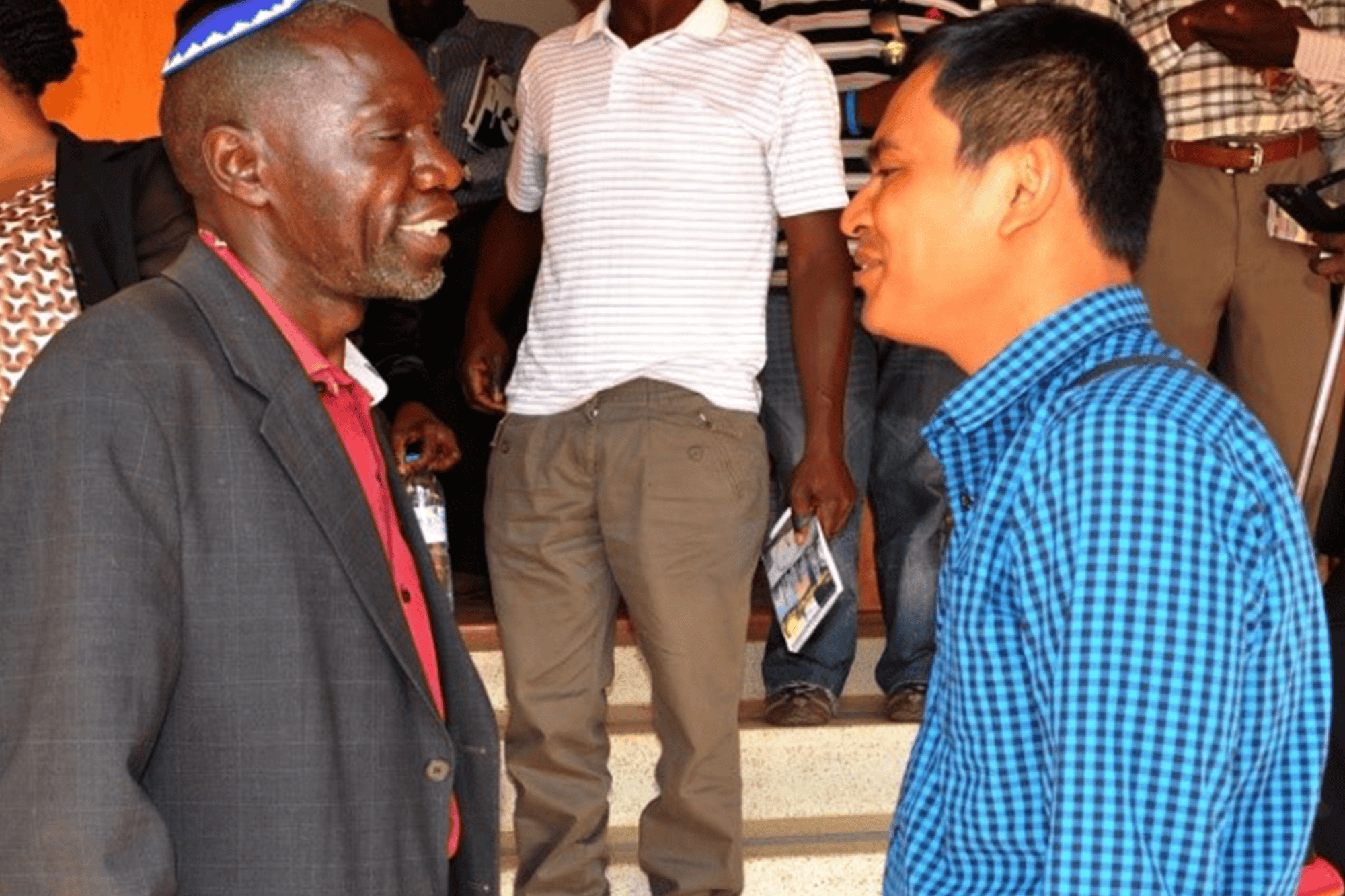
In leverage of the indispensable wealth of religious leaders of diverse faith backgrounds and spiritual expressions, the URI-GL advocacy and mediation program was firmly anchored. The interfaith leaders merited on their social credit as local peace makers to lead the mediation effort. They were courageous and determined to face the persistent conflicts head on. Their vigilance, neutrality and commitment to handle any case that reaches their attention was unquestionable. Bishop Ocholla a lead peace anchor and URI-Chairperson would over and over again urge thus “the land in the Acholi and Lango region belongs to all of us. It belongs to the past, present and future generations, therefore no one has the right to deny anyone access to it” These were words of wisdom whose strong message would see a violent situation simmer with the conflicting parties becoming willing to dialogue.
Conscious of the fact that communities have local dispute resolution mechanisms, the program strategically integrated the local councils, cultural leaders, Area Land Committees (ALCs) and most importantly the youth and women who were the primary perpetrators and victims respectively. And for purposes of effective conflict early warning signals and case response, as well as creating more synergies, the local CSOs formed the formidable force to tackling the problem.
The three years’ journey (2012 to 2014) was driven by the passion of providing non violent ADR (Alternative Dispute Resolution) mechanisms to address the persistent land based conflicts among the locals of Koch Goma-Amuru, Nwoya, Padibe S/C-Lamwo and Pabbo S/C- Amuru districts respectively. Atleast our core mandate of ending religiously motivated violence to promote cultures of peace and healing for the Earth would not let us look on and justice over these issues had to be served in an amicable-less forceful way. The target areas were the most heated hot spots, bows and arrows were a common armoury used by the conflicting parties. In some of the mediation sessions, the parties would come with machetes ready for war. The scene was pretty scaring as witnessed in the cases of Awaja vs Obira clan in Nwoya, Padibe, Koch Goma, Anaka and Amuru cases, among others; which are some of our major success stories. In some of these cases goats were slaughtered in celebration of the reconciliation reached by the conflicting parties for example in Atiak.
Our collaboration with a credible local peace building organization and our member, ARLPI was one of the project’s fundamental approaches which earned trust for the intervention. The religious leaders who hail from the Anglican, Catholic, Muslim and SDA faith backgrounds, steered the intervention coming from a historical track record of leading a cease-fire that saw the signing of the Peace pact between the government of Uganda and the Lord’s Resistance Army of Joseph Konny, after two decades of failed negotiations with local and international stakeholders. This was just enough!
The key pillars and elements of the project developed are merited on the leveraging of local peace anchors in the name of religious leaders with a historical track record of leading negotiations with a two decades war. Additionally extremism manifesting in any sense is a strong interference with peace which is URI’s core intervention area of ending violence to promote cultures of peace and healing for the Earth, which we couldn’t ignore. The extremists trying to use religion (and mostly specifically culture in this part of the country) to advance their actions is also another driving factor. It’s also noteworthy that the area of violent extremism is not an area that has attracted a lot of attention or intervention from the CSO fraternity but let if in the hands of the security organs yet the civil society has so much contribution into transformation of communities under turmoil through the use of non violent mechanisms. The religious teachings call for peace and people living in harmony where justice is ultimately realized is another one of our motivations for our intervention.
The most important activities in this whole process are the mediation dialogues and the integration of information sharing and awareness creation which was able in informing the affected communities that the extremists have ulterior motives and interests but not in any way attached to any specific religious or cultural teaching. Secondly, the integration of the media awareness campaigns calling upon people to be alert on the issues at hand which may be a commonly used strategy by CSOs, but its capacity to draw more actors into owning the cause provided far reaching impact in reaching out to the torn souls.
Going forward with countering extremism reveals that some of the driving factors are more related to governance where the perpetrators feel excluded or dispossessed from equal opportunities in the social, economic and political sense. The aggrieved factions of people or areas feel the pinch of wide socio-economic disparities that force them to use any means possible to advance their cause and aspirations.
Dealing with extremism is not an easy task especially for us who are not security people who will go and hunt down these extremists but ours is to ensure we transform the extremists and maybe those who are vulnerable into being lured into the actions. More so, the wave of extremism goes beyond our borders as Uganda, yet extremists acts as networks with local and international linkages making it a more complex attempt.